How to clean razor clams
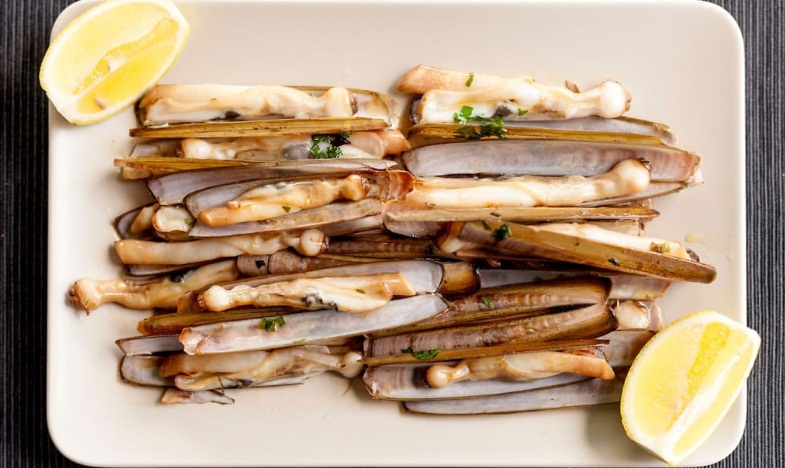
Razor clams, also called cappelunghe or cannelli , are molluscs with an elongated and cylindrical shape, highly appreciated by true gourmets.
With a tender and delicate flavour , this seafood is excellent in numerous recipes: seafood soups , sauces or delicious appetizers such as grilled razor clams , grilled razor clams or, for true connoisseurs, raw razor clams.
To guarantee freshness and food safety for consumers, Nieddittas’ fresh razor clams are selected, verified and carefully controlled according to rigorous company standards.
In this article we will discover how to clean razor clams step by step. But first let’s find out something more about the characteristics of this mollusc.
Razor clams: characteristics, habitat, fishing and nutritional properties
Belonging to the Solenidae family , razor clams are bivalve molluscs that live buried in sandy seabeds , usually mixed with mud. The size of razor clams usually varies from 12 to 17 centimetres . They have a typical cylindrical and elongated shape (from which the name of the mollusc derives) and a yellowish color with purple streaks. The shape of the razor clam is then characterized by two truncated ends, with a foot protruding from the front side and two siphons joined together on the rear side.
The razor clam lives immersed in the sand of the Adriatic , sinking vertically into the seabed. This trick makes it almost invisible, if it weren’t for the characteristic figure-eight design formed by the two siphons that filter the water to obtain nutrients. It is precisely the trace of the siphons that is identified during amateur fishing , which mainly takes place by hand. Experienced divers use a rod with a sort of arrow to extract the molluscs. Instead, professional fishing uses turbo blowers (called cannellare) to facilitate collection with special dredgers.
Finally, regarding the nutritional side, razor clams have a low caloric intake, with a predominance of proteins and small quantities of fats , including unsaturated fatty acids. They are rich in peptides with high biological value and contain sodium and iodine from salty sea water . They could also provide good concentrations of B vitamins and possibly vitamin D. Free of fiber and gluten, razor clams are foods recommended in the diet for overweight people, as they are low in calories. However, they should be consumed in moderation by those suffering from sodium-sensitive hypertension. An average portion of razor clams is approximately 150 g, which provides approximately 120-130 kcal .
How to clean razor clams?
Now we can finally see how to clean razor clams. To clean razor clams correctly and ensure safe and pleasant consumption, simply follow the following simple but fundamental steps.
- Start by opening the molluscYou could use a knife or sharp object to pry between the shells. Be sure to do this gently to avoid damaging the internal contents.
- Once opened, notice the footof the razor clam. Carefully, move your foot outward from the shell . This part of the mollusk is the one that extends from the front of the shell. This way, you will uncover the intestinal pouch.
- Now, it is essential to remove the intestinal sac, that is, that black sac that is located about halfway down the razor clam’s body. The intestinal pouch must be detached delicately to avoid detaching the rest of the mollusc from the valves.
- Once the intestinal pouch has been removed, all you have to do is rinse the razor clam carefully under running water, which must be cold and not too strong. This step will help you eliminate any residual sandor other impurities present.
Always remember to handle razor clams with care and follow hygiene rules during the cleaning process. Now you can finally enjoy these delicious molluscs in delicious recipes!