Diazepam
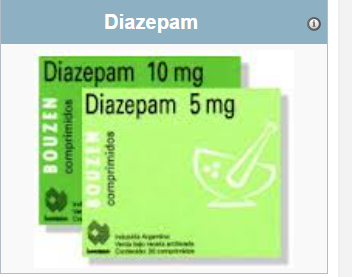
Diazepam . It is an Anxiolytic. Muscle relaxant. Sedative-Hypnotic.
Summary
[ disguise ]
- 1 Description
- 2 Chemical structure
- 3 Pharmacokinetics
- 4 Indications
- 5 Contraindications
- 6 Precautions
- 7 Adverse reactions
- 8 Sources
Description
Diazepam is a central nervous system depressant, and produces all levels of central nervous system depression, from mild sedation to hypnosis or coma depending on the dose. The precise places and mechanisms of action are not fully established. Although several mechanisms of action have been proposed, it is believed that diazepam, after interacting with a specific neural membrane receptor, enhances or facilitates the inhibitory action of the neurotransmitter gamma-aminobutyric acid, mediator of inhibition both at the presynaptic level in the of the central nervous system.
Presentation in blisters
Anxiolytic; Sedative-hypnotic: It is believed to stimulate gamma-aminobutyric receptors in the ascending reticular activating system. Since it is inhibitory, stimulation of the receptors increases inhibition and blocks cortical and limbic excitation after stimulating the reticular formation of the brainstem.
Skeletal muscle relaxant: The exact mechanism of diazepam is not fully established, but it appears to produce skeletal muscle relaxation primarily by inhibition of polysynaptic spinal afferent pathways; however, it can also inhibit monosynaptic afferent pathways.
Diazepam can inhibit mono- and polysynaptic reflexes by acting as an inhibitor of neural transmission or by blocking excitatory synaptic transmission. Also, it can directly depress motor nerves and muscle function.
Chemical structure
IUPAC nomenclature: 7-chloro-1,3-dihydro-1-methyl-5-phenyl-2H-1,4-benzodiazepin-2-one
Chemical formula: C 16 H 13 ClN 2 O
Pharmacokinetics
- Absorption: Diazepam and its active metabolites are 99% bound to plasma proteins.
- Distribution: The distribution of diazepam is rapid due to its hyposolubility. The apparent volume of distribution is high. Secondary peaks in plasma concentration have been described 6 and 12 hours after administration. These are surely due to enterohepatic recirculation. Diazepam crosses the placental barrier and is excreted in milk.
- Metabolism: Diazepam is degraded in the hepatic microsomal enzyme system. The main metabolite of diazepam, the N-desmethyl derivative, is biologically active; Other active metabolites are a ring-hydroxylated derivative and demethylated hydroxylated oxazepam.
- Elimination: Diazepam is excreted almost entirely in the urine, 70 to 90% in the form of oxidized and conjugated metabolites such as glucuranides, and the remainder in the feces via bile. Elimination is somewhat slow as active metabolites can remain in the blood for several days, possibly producing persistent effects.
- Plasma half-life: It is 20 to 70 hours. However, the half-life for the premature newborn and geriatric patients is 3 to 4 times longer than the young adult. Furthermore, severe liver disease can double or quintuple the half-life of diazepam.
Indications
Anxiety states in neurotic patients. Non-psychotic agitation. Treatment of skeletal muscle spasm and pain, associated with rheumatoid arthritis, spastic cerebral palsy and fractures. To relieve the neuromuscular symptoms of tetanus. As an adjuvant to relieve symptoms of acute alcohol withdrawal, such as acute agitation, tremor, impending or acute delirium tremens and hallucinosis. Its use in seizures is positive but not as a regular treatment for epilepsy, but rather as a short-term adjuvant treatment.
Contraindications
It should not be used in association with CNS depressants (antihistamines, tricyclic antidepressants, anticonvulsants, MAOIs, diphenoxylate-atropine, meprobamate, promethazine, carbamazepine, alcohol). It should also not be used in children under 6 months, pregnancy, breastfeeding, and a history of glaucoma. Known hypersensitivity to the drug
Precautions
It should be used with caution in elderly patients and in patients with hepatic or renal dysfunction.
When used for a long time, liver tests and serial blood counts should be performed .
This medication may cause drowsiness and patients under treatment should not drive vehicles or operate machinery where decreased attention could cause accidents.
Adverse reactions
The most common include:
- Dizziness
They are generally associated with high doses.
Occasionally they can produce:
- Diplopia.
- Hypotension.
- Headache.
- Memory decline.
- Broken language.
- Incontinence and constipation.
Diazepam can produce paradoxical reactions, such as:
- Excitement
- Depression
- Dstimulation and hallucinations, which usually disappear quickly when the drug is discontinued.