Delta Flight DL275 Diverted LAX: What Happened and Why
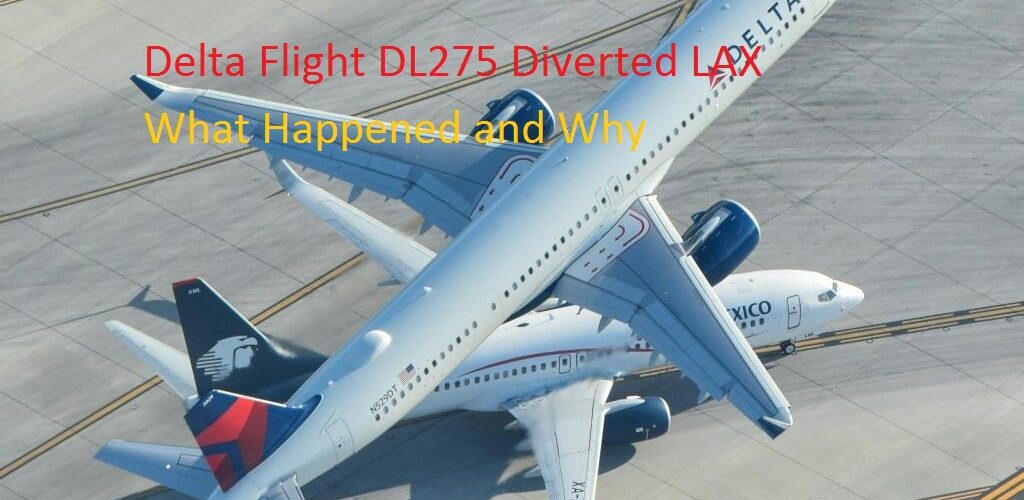
On May 27, 2025, Delta Air Lines flight DL275, an Airbus A350-900 departed from Detroit Metropolitan Wayne County Airport to Tokyo Haneda, faced an in-flight emergency and was forced to divert to Los Angeles International Airport (LAX) due to a critical issue with the aircraft’s anti-ice system. This unexpected event, which turned a routine trans-Pacific journey into a 12-hour aviation ordeal, has sparked discussions about long-haul flight safety, airline decision-making, and the role of advanced technology in preventing such incidents. Below is a comprehensive overview of what happened, the reasons behind the diversion, its impact on passengers, and the broader implications for the aviation industry.
Delta Flight DL275 Diverted LAX: An Overview
May 27, 2025, 15:53 EDT Delta Flight DL275, operated by an Airbus A350-900 (registration N508DN), departed Detroit for Tokyo, already delayed by nearly two hours due to a late inbound flight from Amsterdam.
Approximately 20:15 EDT: While cruising at 38,000 feet over the North Pacific Ocean, roughly 620 nautical miles southwest of Anchorage, Alaska, the flight crew received an alert indicating a malfunction in the Rolls-Royce Trent XWB engine’s anti-ice system. This system, critical for preventing ice buildup on engine components during high-altitude flights over cold regions like the Bering Sea, had failed, posing a significant safety risk.
00:34 UTC, May 28, 2025: The crew identified the anomaly, and after 11 minutes of intense cockpit crisis management, they declared an emergency at 00:45 UTC, requesting vectors to the nearest suitable airport with Rolls-Royce maintenance capabilities.
01:08 PDT, May 28, 2025: After a five-hour reroute, the aircraft landed safely on Runway 06R at LAX, concluding a 12-hour and 15-minute journey. The plane carried 287 passengers and crew, with no reported injuries.
Flight Details
| Detail | Information |
| Date | May 27–28, 2025 |
| Aircraft | Airbus A350-900 (N508DN) |
| Route | Detroit (DTW) → Tokyo (HND) |
| Diversion Airport | Los Angeles (LAX) |
| Time in Air (Total) | ~12 hours 15 minutes |
| Passengers | Approx. 300 |
| Reason for Diversion | Engine anti-ice system failure |
| Estimated Cost | $2.3 million |
Why Divert to LAX? Strategic Decision-Making
The decision to divert to LAX was not arbitrary but based on several critical factors:
- Delta Hub Capabilities: LAX is a major Delta hub with certified maintenance facilities for the Airbus A350 and 24/7 Rolls-Royce engine specialists. This ensured that the aircraft could be promptly inspected and repaired.
- Runway and Emergency Support: LAX offers long runways suitable for a potentially overweight landing, favorable weather conditions, and robust emergency services, making it an ideal choice for a high-risk landing.
- Passenger Rebooking Options: As a major international airport, LAX provides multiple daily flights to Tokyo, facilitating easier rebooking for affected passengers. The hub’s extensive terminal facilities also supported passenger accommodations during the delay.
Financial and Operational Impact
| Expense Category | Estimated Cost |
| Fuel for Diversion | $500,000 |
| Landing Fees at LAX | $50,000 |
| Maintenance/Inspection | $300,000 |
| Passenger Rerouting | $800,000 |
| Accommodation/Meals | $400,000 |
| Total | $2,050,000 |
- Additional loss: Revenue from the canceled Tokyo segment and ripple effects on Delta’s Pacific operations stretched losses to around $2.3 million.
The Technical Issue: Anti-Ice System Failure
The root cause of the diversion was a malfunction in the Rolls-Royce Trent XWB engine’s anti-ice system. This system uses heated bleed air (400-600°F) from the engine’s compressor to prevent ice formation on critical components like fan blades and inlet guide vanes. Ice buildup in these areas can lead to thrust loss or, in extreme cases, engine failure particularly hazardous during transoceanic flights over freezing regions like the North Pacific.
According to technical analyses, the failure began six hours before takeoff but went undetected, highlighting a gap in pre-flight maintenance checks. The Airbus A350 maintained stable flight parameters during the five-hour journey to LAX, demonstrating the aircraft’s robust design under compromised conditions. However, the incident underscores the importance of real-time monitoring and predictive maintenance technologies.
Passenger Experience and Delta’s Response
Passengers reported a calm and professional response from the flight crew, who provided regular updates and maintained order during the diversion. Upon landing at LAX, Delta’s ground staff facilitated deplaning, provided accommodations, meals, and rebooking options, and ensured that passengers reached their destinations, albeit with delays. Many passengers praised the airline’s transparency and support, though some expressed frustration over the lack of immediate flights to Tokyo.
Delta issued a statement emphasizing that the diversion was made “out of an abundance of caution” to prioritize safety. The airline worked with Rolls-Royce engineers to diagnose and repair the aircraft, which remained grounded for approximately 18 hours before returning to service.
Financial and Operational Impact
The diversion cost Delta an estimated $2.3 million, with total losses, including long-term revenue and brand impact, reaching up to $5.9 million. Key expenses included:
- Fuel and Rerouting Costs: An additional $847,000 due to an 11-minute delay in declaring the emergency and extended flight time.
- Passenger Compensation: Costs for accommodations, meals, and rebooked flights.
- Operational Disruptions: The cancellation of the Tokyo segment led to a $1.9 million revenue loss and network disruptions across Delta’s Pacific operations for 72 hours.
Broader Implications: The Role of Technology
The DL275 incident has reignited discussions about the need for advanced predictive maintenance technologies. Aviation analysts suggest that AI-powered monitoring systems, which analyze real-time engine data, could have detected the anti-ice system’s subpar performance 3-6 hours before takeoff, potentially preventing the diversion. Other airlines, such as United Airlines and Singapore Airlines, have reported significant reductions in unplanned maintenance events through AI adoption, with United achieving a 35% reduction and $18 million in annual fuel savings.
Delta’s planned $840 million investment in AI tools by 2027 could help mitigate similar incidents in the future, aligning with industry trends toward smarter, safer aviation. However, the incident also raises questions about regulatory barriers and cybersecurity challenges in integrating AI into critical flight systems.
Conflicting Reports and Clarifications
Some sources initially reported the diversion as resulting from a medical emergency or cabin pressure issues, but these appear to be misattributions from other Delta flights. The consensus across reliable aviation sources, including FlightRadar24 data and technical analyses, confirms that the DL275 diversion was due to the engine anti-ice system failure. The aircraft involved was an Airbus A350-900, not a Boeing 777 as suggested by some reports.
Conclusion
The Delta Flight DL275 Diverted to LAX on May 28, 2025, exemplifies the complexities of modern aviation, where real-time decision-making, advanced technology, and safety protocols converge to protect passengers. While the incident disrupted travel plans and incurred significant costs, Delta’s swift response and LAX’s robust facilities ensured a safe outcome. As the aviation industry continues to evolve, investments in predictive maintenance and AI-driven monitoring will be critical to reducing such incidents, reinforcing passenger confidence, and enhancing the safety of long-haul flights.
For the latest updates on Delta Flight DL275 or similar incidents, travelers are encouraged to check official airline statements or track flights via platforms like FlightRadar24.