Otorhinolaryngology
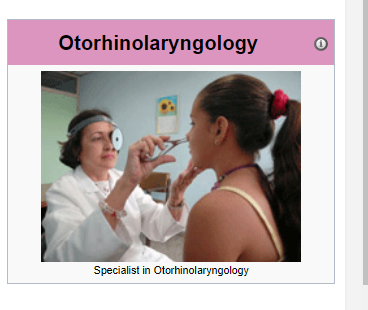
Otorhinolaryngology. It is the medical specialty that is responsible for the prevention, diagnosis and treatment, both medical and surgical, of diseases of: 1. The ear. 2. The upper air-digestive tract: mouth, nose and paranasal sinuses, pharynx and larynx. 3. The head and neck structures.
Likewise, traumatological, oncological, plastic, aesthetic and reconstructive surgery of the face and neck can also be treated by the otorhinolaryngologist and specialist in head and neck surgery.
Summary
[ disguise ]
- 1 Origins
- 2 Subspecialties
- 3 Specialization in Otorhinolaryngology
- 4 Representation
- 5 Sources
origins
The origins of Otorhinolaryngology date back to the 19th century. It was towards the second half of that century that people began to talk about injuries inside our cavities, giving way to the invention of the ophthalmoscope and the laryngoscope. Of course, before that century, There were already important discoveries in the field of anatomy and clinical practice, made by doctors who were not necessarily specialists but rather scholars of multiple areas or even singing teachers.
In Cuba, by law of July 12, 1906, the 17th chair of Diseases of the Larynx, Ears and Nasal Cavities was created in the School of Medicine of the Faculty of Medicine and Pharmacy, which would be taught in the fourth year of the medical degree, with an extension of three months. After 19 years of attempts, the first chair of the specialty of Otorhinolaryngology in Cuba was founded. On May 27, 1907, Dr. Emilio Martínez Martínez, full professor and owner of said chair, was appointed through competitive examination exercises.
Subspecialties
- Rhinology studies nasal and paranasal cavity conditions and nose surgeries for functional and/or aesthetic purposes.
- Laryngology studies conditions and alterations of the larynx that affect the quality of the voice.
Currently it has led to a new branch of otorhinolaryngology, Neurolaryngology, which deals with the study of the electrical and biomechanical events that take place during the execution of the phonatory, respiratory and swallowing functions of the larynx.
It has arisen as a consequence of progress in the understanding of neuroanatomy, neurophysiology and laryngeal biomechanics. Neurolaryngology, therefore, brings together the set of knowledge necessary to understand and treat laryngeal diseases that arise as a consequence of sensory and motor alterations of the larynx; defining a new multidisciplinary field that studies the neural mechanisms of laryngeal functions through various approaches.
As such, neurolaryngology is useful not only to understand diseases, but also to propose effective treatments in many cases that are difficult to solve. In fact, recent interest in laryngeal neuroanastomosis techniques, laryngeal reconstruction techniques, laryngeal pacemaker, laryngeal transplantation, and neurosurgery of spasmodic dysphonia is a consequence of the development of neurolaryngology.
- Otology studies pathologies associated with the middle ear (chronic middle ear and mastoid infections, Otosclerosis).
- Vestibulology studies pathologies associated with the vestibular apparatus (vertiginous syndrome, Ménieré’s disease).
The previous two are grouped by Otoneurology, which is responsible for the study of pathologies associated with vertiginous processes, such as Meniere’s syndrome, otosclerosis and other pathologies related to balance, as well as secondary hearing disorders in addition to secondary problems of infections. ear chronicles.
- Facial plastic and reconstructive surgery is the branch of Otorhinolaryngology that is dedicated to performing aesthetic and functional surgeries of the nose, ears, chin and face, with the principle that it works well and looks good.
- Speech therapy and phoniatrics treat alterations in speech articulation.
- Audiology studies alterations related to hearing, especially deafness and hearing loss (perceptive and receptive).
- Head and neck surgery is responsible for the study of tumor processes that affect the specialty.
Also as special sections:
Pediatric Otorhinolaryngology, in addition to medicine and surgery in obstructive sleep disorders as subdivisions of Otorhinolaryngology.
Specialization in Otorhinolaryngology
Otorhinolaryngologists are specialists who, after completing their medical studies, complete a 3-year clinical-surgical preparation period (residency), during which they acquire general knowledge of the specialty. Once the residency studies are completed, they can undergo training and verticalize in the existing subspecialties.