How to bake delicious paska

The tastiest paska is homemade. We tell you what is important to know in order to make holiday baking a success.
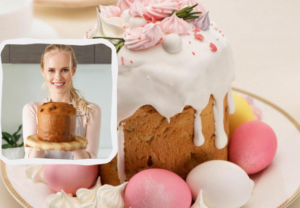
An ideal paska is lush, soft, well-baked and aromatic. In order for it to turn out like this, it is worth remembering some important nuances in its preparation.
How to cook delicious paska
A few important points will help in the preparation of festive pastries:
- All products should be at room temperature.
- Paska is tastier with “live” yeast (pressed).
- The yeast must be checked for suitability before cooking – prepare the dough. If it does not rise for a very long time, then you will have to mess with the dough all day, so it is better to process the dough. Take fresh yeast for it, see the expiration date on the package, and do not keep open packages for a long time.
- If you have prepared the dough, and it does not rise at all – perhaps the yeast is old or unsuitable. In this case, the dough can be “revived” with a new dough.
- The optimal temperature for proofing the dough is 28-30 degrees, if it is lower, the fermentation process slows down, at a high temperature the activity of the yeast stops, they can “cook”.
- Do not put the paska dough in a bowl of warm water – leave it in a warm place to make it rise.
- During the second proofing of the dough in the molds, it should double in size – do not leave it longer than necessary, as the dough will overgrow and fall, and the pastry may come out with a concave cap.
- It is best to bake paskas of approximately the same size, because small ones are baked faster: it may be that they are already ready and need to be removed, and large ones have a raw middle. If you open the oven early, the dough will fall in unbaked strips.
- In narrow and small forms, strips are baked and kept better than in large and wide ones.
- After baking, it is best to cool the pasques on their side by placing them on a towel and periodically turning them from one side to the other